


Hiring Bands for Corporate Events: What Buyers Need to Know
Updated: 4 days ago
Last Updated: November 22, 2026
Quick Summary
Hiring bands for corporate events means booking live musicians who read the room and adjust tempo and volume in real time, turning a polite reception into a night guests remember. Cost depends on band size, performance duration, travel, production, and date demand, so ask for quotes itemized into those five buckets:
Party bands suit galas and closings, while jazz trios fit cocktail hours and dinners.
Corporate party band sets usually run 45 to 60 minutes with short breaks between them.
Confirm deposit, cancellation, force majeure, and overtime terms in writing before signing.
Many venues require proof of liability insurance before the band can load in.
Ask whether the band keeps substitute musicians who know the book if a player is unavailable.
Ready to book a band that fills the floor? Vegas Groove & The Silver State Horns brings a full horn section and the hits of the '60s, '70s and '80s hits to your corporate event.
Table of Contents
Band and Musician Options: Party Bands, Horn Sections, and Specialty Acts
What Drives Corporate Event Band Cost
The five cost buckets
How to compare quotes without a published rate card
Where planners usually find savings
Contracts, Insurance, and Contingency Planning
Contract terms to confirm in writing
Insurance and venue requirements
Contingency planning and backup plans
Reserve Your Date with Vegas Groove & The Silver State Horns

Why Live Corporate Event Bands Change the Room
Hiring bands for corporate events is the fastest way to turn a polite reception into a night people talk about on Monday. A DJ presses play; a live band reads the room, stretches a chorus when the floor fills, and pulls the crowd in with a horn line they can feel in their chest.
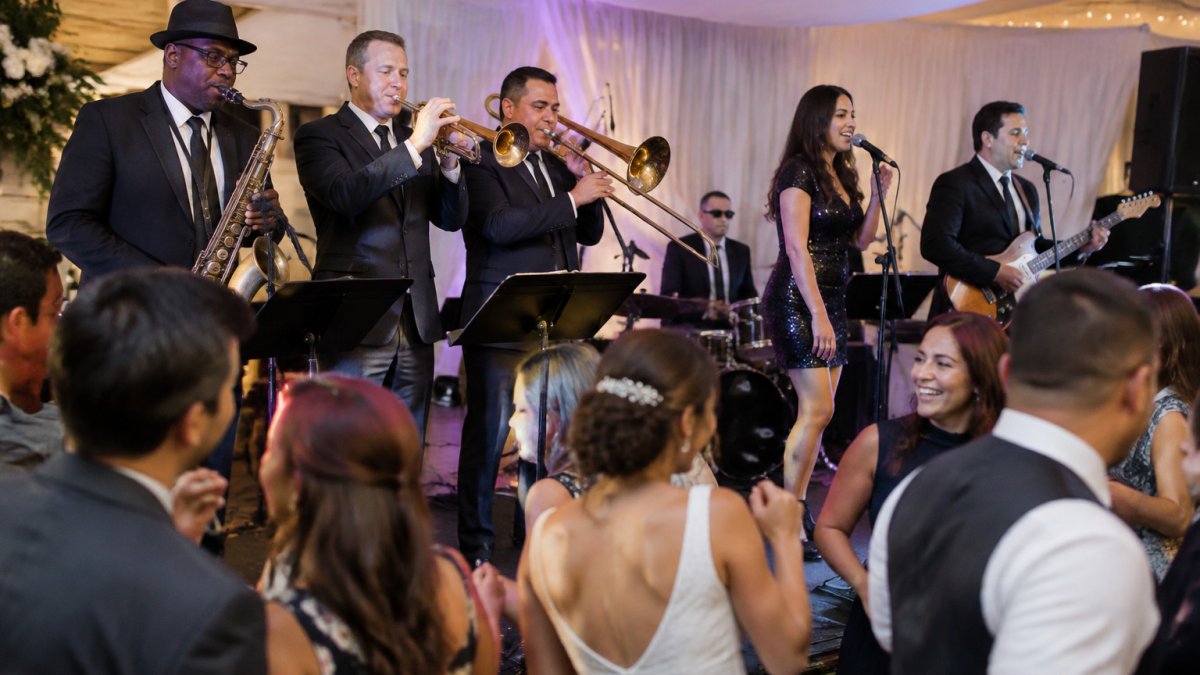
That shift is not luck. Live musicians respond to cues a recording cannot: a raised glass, a cluster of guests drifting toward the stage, a lull after dinner. The band adjusts tempo and volume in real time, and the crowd follows. Video captures it better than any description, which is why we point planners to our Videos before they commit.
The result is a guest experience that feels like an event, not a background playlist.
Types of Corporate Events That Need a Live Band
Conferences, galas, fundraisers, brand activations, and private business functions all benefit from live music, though each needs a different energy level. A conference closing party wants danceable familiarity; a gala wants elegance that builds to a packed dance floor; a fundraiser wants a band that can pause graciously for the appeal.
Trade show activations reward short, punchy sets that stop foot traffic. Company anniversaries and award nights need a band that can play under speeches and then ramp up. Seeing photos of past corporate functions helps planners picture the fit for their own room, so browse our Photos to judge the staging and crowd for yourself.
Band and Musician Options: Party Bands, Horn Sections, and Specialty Acts
The right format depends on your audience and venue, not on what looks impressive on a contract. A party band covers the widest range and keeps a dance floor moving. A horn-section band adds brass punch suited to soul and funk. Specialty acts, from jazz trios to solo pianists, suit cocktail hours and VIP receptions where conversation matters more than volume.
Here is how the common options compare:
Format | Best For | Typical Feel | Watch Out For |
Party band | Galas, closings, anniversaries | High energy, danceable | Can overpower a small room |
Horn-section band | Soul, funk, '70s and '80s nights | Big, brassy, interactive | Needs adequate stage space |
Jazz trio or quartet | Cocktail hours, dinners | Elegant, low volume | May not fill a dance floor |
Solo or duo | Receptions, VIP lounges | Intimate, flexible | Limited crowd engagement |
DJ plus live musicians | Brand activations | Modern, hybrid | Coordination between acts |
A brass-focused band works for a smaller private party too, provided the band scales its stage plot and volume to the room. Before you book, ask for the actual songs in the repertoire so you can judge whether the set list fits your crowd.
What Drives Corporate Event Band Cost
Corporate event band cost depends on band size, performance duration, travel, production, and date demand, not on a single flat rate. A smaller party band and a full horn-section show can sit in different pricing tiers, and the gap can widen once travel and production are included. The useful move is not to hunt for one number but to build a budget model you can compare quotes against.
The five cost buckets
Every corporate band quote is really five line items stacked together. Ask each band to break its quote into these buckets so you can compare apples to apples.
Talent fee (band size): more players means a larger fee. A horn section adds players and therefore cost, but it also changes what the band can play.
Performance duration and sets: fees are usually built around a set count (for example, two or three 45-to-60-minute sets). Extra sets, extended overtime, and continuous background music during dinner all add to the fee. Confirm whether the quote covers a fixed number of sets or a block of hours.
Travel and lodging: distance from the band's home base drives cost. Local bands may charge mileage; out-of-market bands add airfare, hotel nights, per diems, and ground transport. A band that is already touring through your region can sometimes reduce travel cost, ask.
Production: sound system, stage lighting, backline, load-in labor, and soundcheck time. A quote that looks lower may simply exclude production you will pay for elsewhere.
Date demand: peak season (spring and fall gala season, December holiday parties), Saturday nights, and short-notice bookings carry a premium. Off-peak weeknights and dates with more lead time are where negotiating room usually exists.
How to compare quotes without a published rate card
Because every event differs, bands rarely publish a single rate. Instead, ask for a written quote that itemizes the five buckets above, then compare on total delivered cost, not on the headline talent fee.
Watch out: a quote that bundles production but never names the equipment or the engineer is a quote you cannot compare. Ask for the equipment list and who operates it.
Where planners usually find savings
Pricing depends on quantity, dates, and delivery, so reach out for a quote built around your date, venue, and set length. Bring the five-bucket framework to that conversation and you will get a quote you can actually compare.
How to Book a Band for an Event: A Step-by-Step Checklist
Knowing how to book a band for an event comes down to a clear sequence: define the event, shortlist bands, check proof, confirm logistics, and sign a contract. Follow the steps in order and you avoid the week-of scramble.
Define your date, venue, guest count, and budget range
Shortlist bands that fit your audience and room size
Review live video, recordings, and references from real events
Confirm the repertoire and whether song requests are possible
Ask about equipment, sound system, and load-in requirements
Agree on set length, breaks, and show flow
Sign a contract covering deposit, cancellation, and contingencies
Confirm a single point of contact for the week of the event
Checking upcoming shows lets you see a band live before you sign, which beats any press kit.
Questions to Ask a Wedding or Event Band Before You Sign
The questions to ask a wedding or event band fall into four buckets: proof, logistics, flexibility, and terms. Ask for recordings and references from comparable events. Ask who handles load-in, soundcheck, and equipment. Ask how the band adapts if your crowd skews older or younger. Ask what the contract says about deposits and cancellation.
Ask directly who your contact will be in the final week, and get it in writing.
Corporate Party Band Set Length and Show Flow
Corporate party band set length usually runs in blocks of 45 to 60 minutes with short breaks, though the right flow depends on your schedule. Dinner wants lower-volume background; the post-dinner window wants the highest energy. Build the night around those phases.
A structure that many events use is a mellow first set during arrivals, a high-energy set after dinner, and a closing set that peaks before guests leave. Confirm how many sets the fee covers and whether overtime is available.
Contracts, Insurance, and Contingency Planning
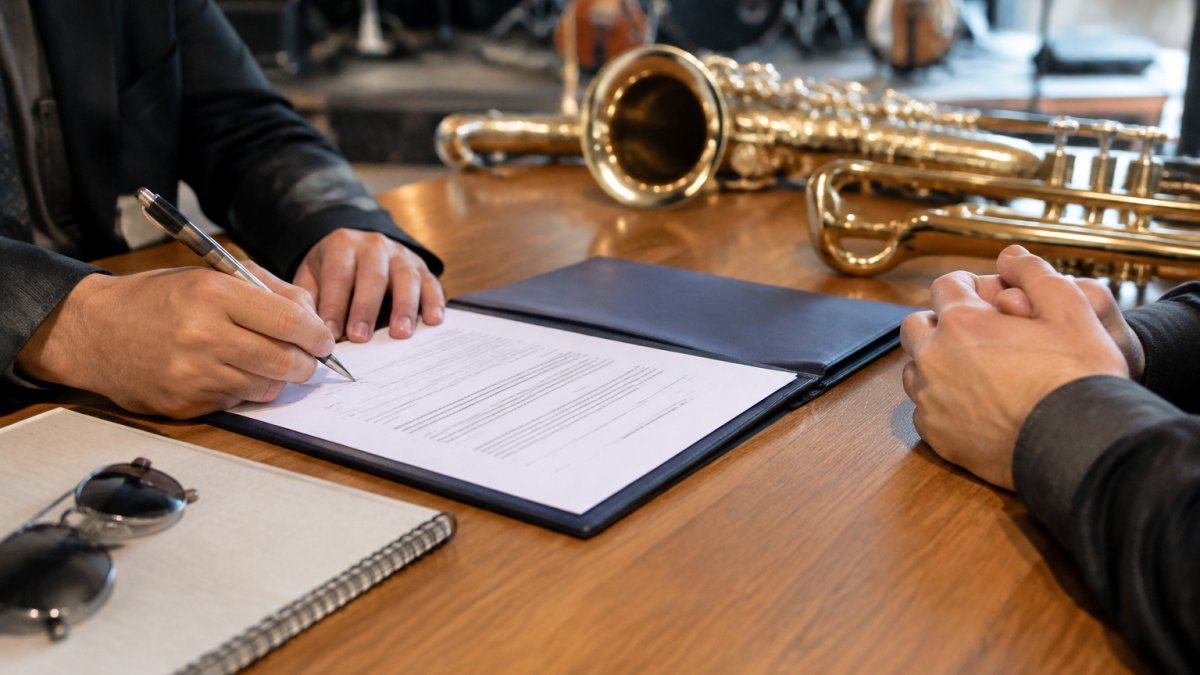
A solid contract protects both sides: it names the fee, deposit, cancellation terms, and what happens if a musician falls ill. But the difference between a contract that protects you and one that merely exists is in the specifics. Read every clause below before you sign, and get the answers in writing.
Contract terms to confirm in writing
Deposit and payment schedule: how much is due at signing, when the balance is due, and what payment methods are accepted. A common pattern is a deposit at signing with the balance due before the event date.
Cancellation and postponement: what happens if you cancel, what happens if the band cancels, and whether deposits transfer to a rescheduled date. Ask specifically whether a postponement is treated as a cancellation.
Force majeure: the clause that covers events outside either party's control, severe weather, venue closure, travel disruption. Confirm it is mutual, not one-sided.
Scope of performance: number of sets, set lengths, break lengths, arrival and soundcheck times, and the end time. Overtime rates should be stated, not negotiated at midnight.
Repertoire and requests: whether song requests are included, how far in advance they are needed, and whether the band can honor do-not-play lists.
Production responsibilities: who supplies the PA, lighting, backline, and stage, and who operates the sound. Name the equipment.
Exclusivity and conduct: whether the band will play other events the same day, and the dress code and conduct expectations for a business audience.
Insurance and venue requirements
Many venues require proof of liability insurance before load-in, and some require the band to be named as an additional insured on the venue's certificate. Ask the band whether it carries general liability coverage and whether it can provide a certificate of insurance on request. If the band does not carry coverage, the venue may require you to obtain it, a cost and a delay worth knowing about early.
Get the venue's production requirements in writing and share them with the band before signing: stage dimensions, power availability, load-in access and elevator restrictions, sound limits, and curfew. A band that has played the room before can flag problems you would otherwise discover on the day.
Watch out: a venue sound limit or curfew that the band learns about at load-in can force a quieter show or an early end, confirm both in the contract phase, not the week of the event.
Contingency planning and backup plans
Ask what the band does if a key player is unavailable. Ask whether the band maintains substitute musicians who know the book, and how they would be arranged if a player is unavailable. Confirm who your single point of contact is in the final week, and get that name and phone number in writing.
Build your own backup plan too: keep a copy of the contract and the certificate of insurance with your event binder, confirm the band's arrival time against your load-in schedule, and have a plan for weather if any part of the event is outdoors.
Matching Music to Your Audience and Brand
Music should match the audience in the room and the image your company wants to project. A mixed crowd with older relatives needs volume control and familiar classics; a younger nightlife crowd wants momentum and modern energy. A brass-heavy '60s, '70s, and '80s set reads as celebratory and brand-safe for most corporate audiences, and a versatile band can fold in requests to bridge generations.
Share your guest profile and any brand sensitivities with the band upfront. If your company avoids certain themes or explicit lyrics, say so. A professional band treats the set list as a collaboration and keeps the repertoire clean for a business audience.
Reserve Your Date with Vegas Groove & The Silver State Horns
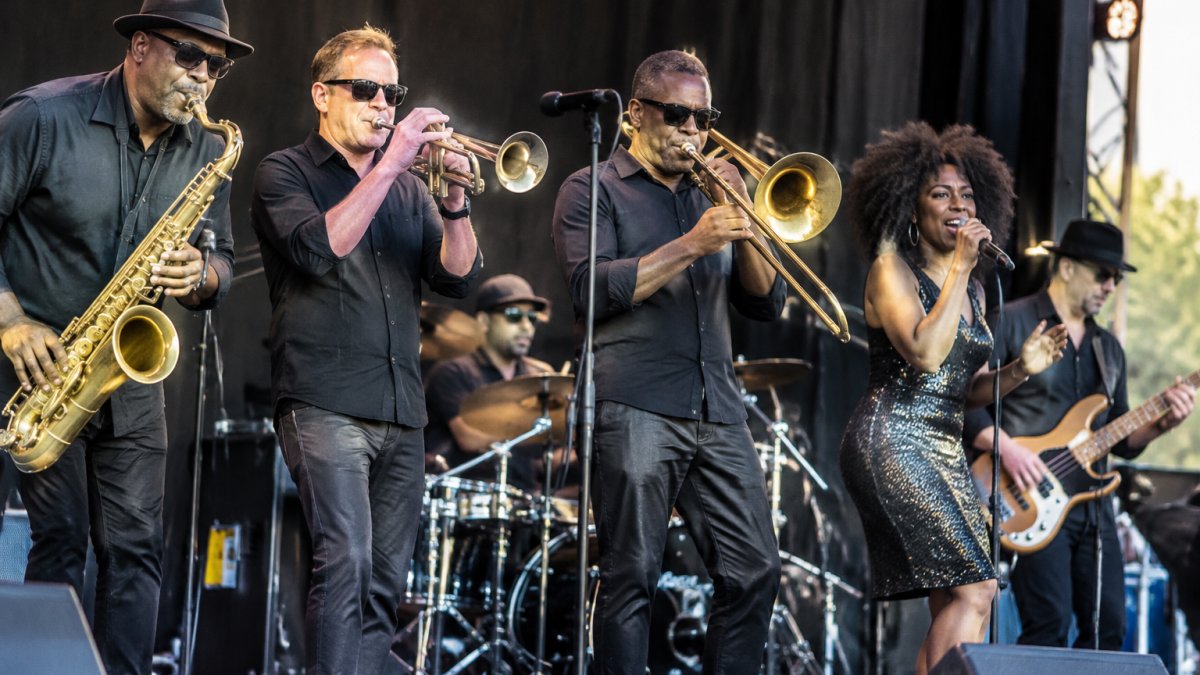
Hiring bands for corporate events rewards planners who ask hard questions early and book the outfit that answers them clearly. Vegas Groove & The Silver State Horns brings a full horn section, seasoned musicians with national performance resumes, and a repertoire of high-energy tributes to Chicago, Tower of Power, and Earth, Wind & Fire.
Ready to lock in your date? Reach out through our Contact page to check availability and talk through your event. Get started with Vegas Groove & The Silver State Horns and give your guests a night they will remember.
The difference between a good corporate function and a great one often comes down to the entertainment. If you want a band that reads the room, brings its own production, and keeps the dance floor packed from the first horn blast, we are ready to help. Our full horn section, experienced players, and '60s-to-'80s repertoire are built for exactly this. Get started with Vegas Groove & The Silver State Horns and reserve your date before the calendar fills.
Frequently Asked Questions
How much does it cost to hire a band for a corporate event?
Corporate event band cost depends on band size, performance duration, travel, and production needs such as sound and lighting. A larger ensemble generally costs more than a smaller combo because more musicians are paid and more equipment may be needed. Pricing varies by event, so request a quote based on your date, venue, and set length rather than assuming a flat rate. Ask what the quote includes: load-in, sound check, MC duties, and any overtime.
How far in advance should you book a corporate event band?
Planning several months ahead is generally wise, since peak seasons and holiday parties fill faster. Large galas and fundraisers with production requirements benefit from extra lead time so contracts, insurance certificates, and venue logistics can be settled. If your date is close, ask about availability right away and confirm deposit terms in writing.
How long should a corporate party band set length be?
Set lengths for corporate party bands vary, so discuss set length when booking to fit your program. Discuss set length when booking so it fits your program: awards, speeches, and dinner service all affect timing. Confirm total performance time, break length, and any overtime rate in the contract.
What should a corporate event band contract include?
A solid contract covers the date, arrival and load-in times, performance times and set length, total fee and deposit, cancellation and rescheduling terms, and who provides sound and lighting. It should also state the band size and any travel or lodging charges, and you can ask whether MC services are included. Ask about liability insurance and whether a certificate naming your venue is available. Get everything in writing so there are no surprises the week of the event.
Will a horn-heavy band be too loud for a mixed corporate crowd?
Ask the band how it manages volume through its sound system and adjusts to the room, including how horns are balanced during dinner and dance sets. Tell the band about older guests, speech times, and any noise limits the venue enforces. Ask how the band plans dynamics around your program so the music energizes the room without overwhelming conversation.
How do you find and book a band for a corporate event?
Start with referrals from venues and event planners who have seen the band live. Check recordings and live performance video, then ask for references from past corporate clients. Ask whether the band carries its own insurance and who handles load-in and sound check. Once you shortlist two or three options, compare quotes on the same scope, ask the questions that matter, and book with a signed contract and deposit.
Comments